

14 Brown Bedroom Ideas That Feel Warm And Stylish
Brown can make a bedroom feel grounded, cozy, and quietly elegant in a way brighter colors often cannot. The trick is using it with some intention. Too much of the wrong brown can feel flat or heavy, but the right mix of tones, textures, and materials creates a room that feels warm, restful, and genuinely stylish. These brown bedroom ideas are designed to help you get that balance right without making the space look dark or dated.
Why Brown Works So Well in a Bedroom
Brown has a natural calm to it. It brings in the comfort of wood, leather, linen, clay, and other earthy materials that already feel at home in a bedroom. It also pairs easily with a wide range of colors, from crisp white and soft cream to dusty blue, olive green, black, and muted blush.
That flexibility is what makes brown such a useful decorating color. It can lean modern, rustic, classic, minimal, or a little moody depending on how you style it. In a bedroom, where comfort matters as much as appearance, that is a pretty strong advantage.
1. Layer Several Shades of Brown Instead of Using Just One
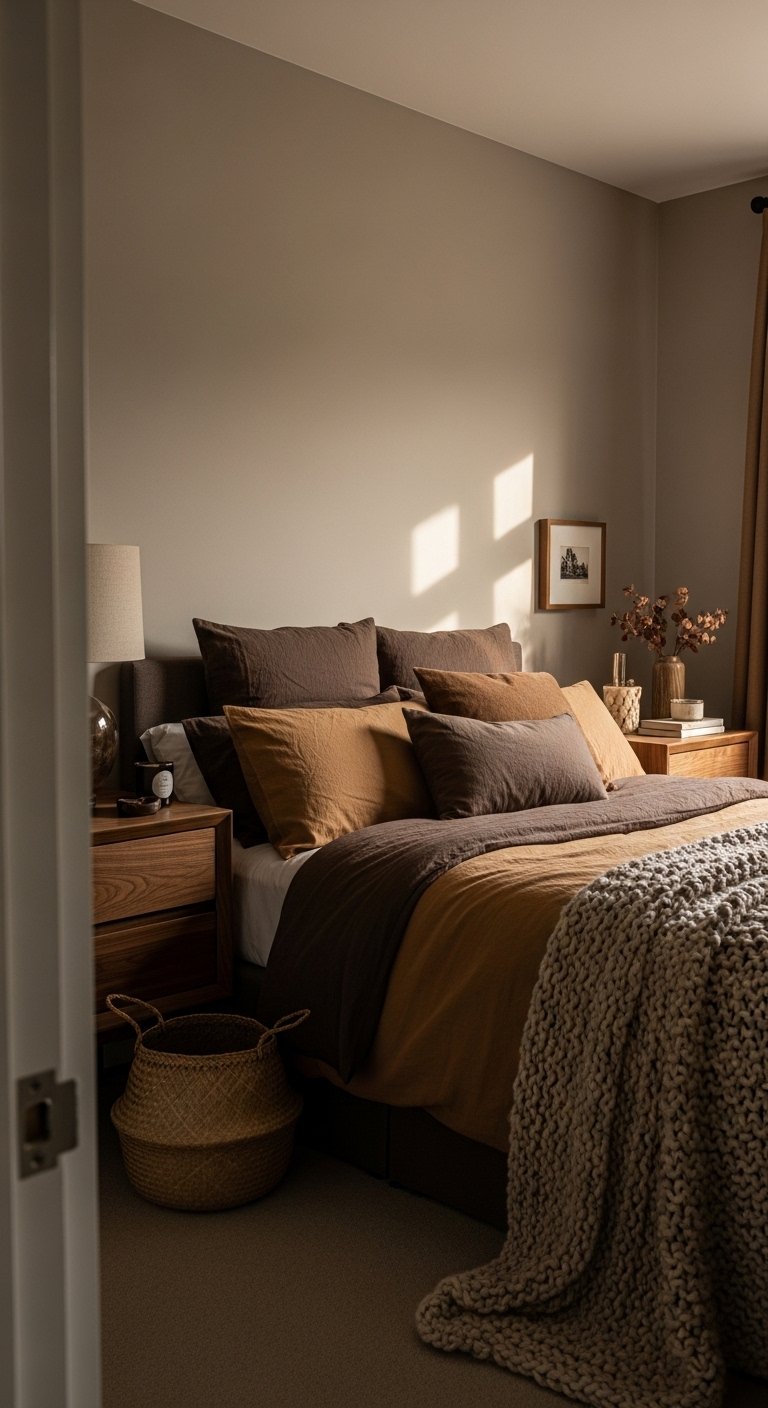
A brown bedroom usually looks better when it includes a mix of tones rather than one exact shade repeated everywhere. Think light taupe walls, a medium walnut nightstand, chocolate bedding accents, and maybe a camel throw at the end of the bed.
This works because layered browns create depth. The room feels collected and warm instead of flat and overly matched. It is especially useful in bedrooms that already have wood furniture, because you can build around what you own instead of replacing everything.
This idea suits almost any style, but it works especially well in modern, transitional, and cozy minimalist rooms. To make it feel intentional, vary the finish as well as the color. Pair matte textiles with polished wood, soft knits with smooth leather, or woven baskets with a sleek lamp base.
One common mistake is making every brown too similar. When the headboard, floor, dresser, bedding, and curtains all land in the same mid-tone range, the room can start to blur together. A little contrast makes a big difference.
2. Try Brown and Cream for a Soft, Relaxed Look
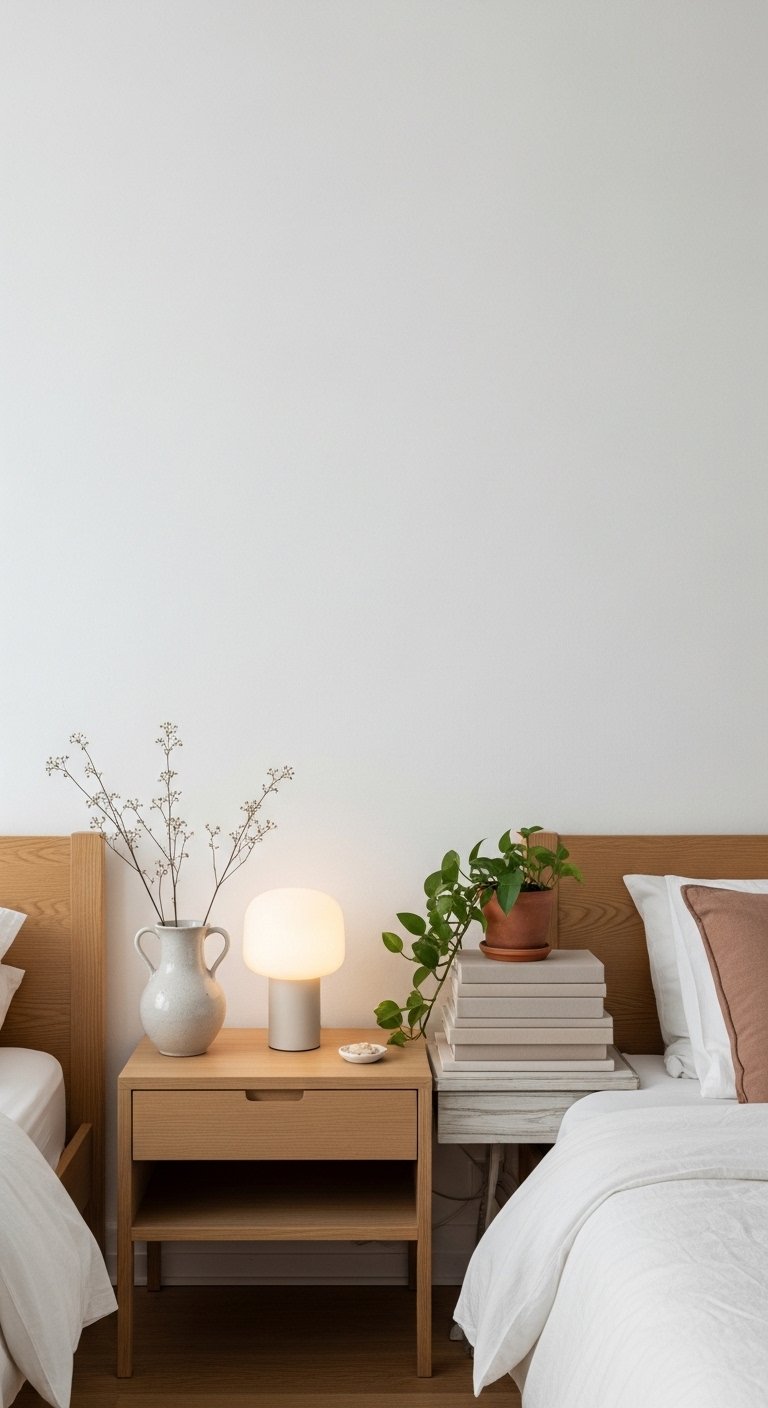
If you want a bedroom that feels warm without looking dark, brown and cream is one of the easiest combinations to get right. Use cream on larger surfaces like walls, bedding, or curtains, then bring in brown through furniture, pillows, throws, or framed art.
The reason this pairing works is simple: cream softens brown. It keeps the space airy while still letting the warmth come through. The result feels inviting and easy to live with, which is exactly what most bedrooms need.
This is a great option for small bedrooms, guest rooms, and spaces with limited natural light. It also suits people who like neutral decor but want something warmer than gray.
To style it well, focus on texture. A brown upholstered bench, cream bedding, a nubby throw, and a wood bedside table can do more than a dozen decorative extras. The caution here is not to let the room become too pale and washed out. Add at least one deeper brown element so the palette has some anchor.
3. Use a Brown Upholstered Headboard as the Main Feature
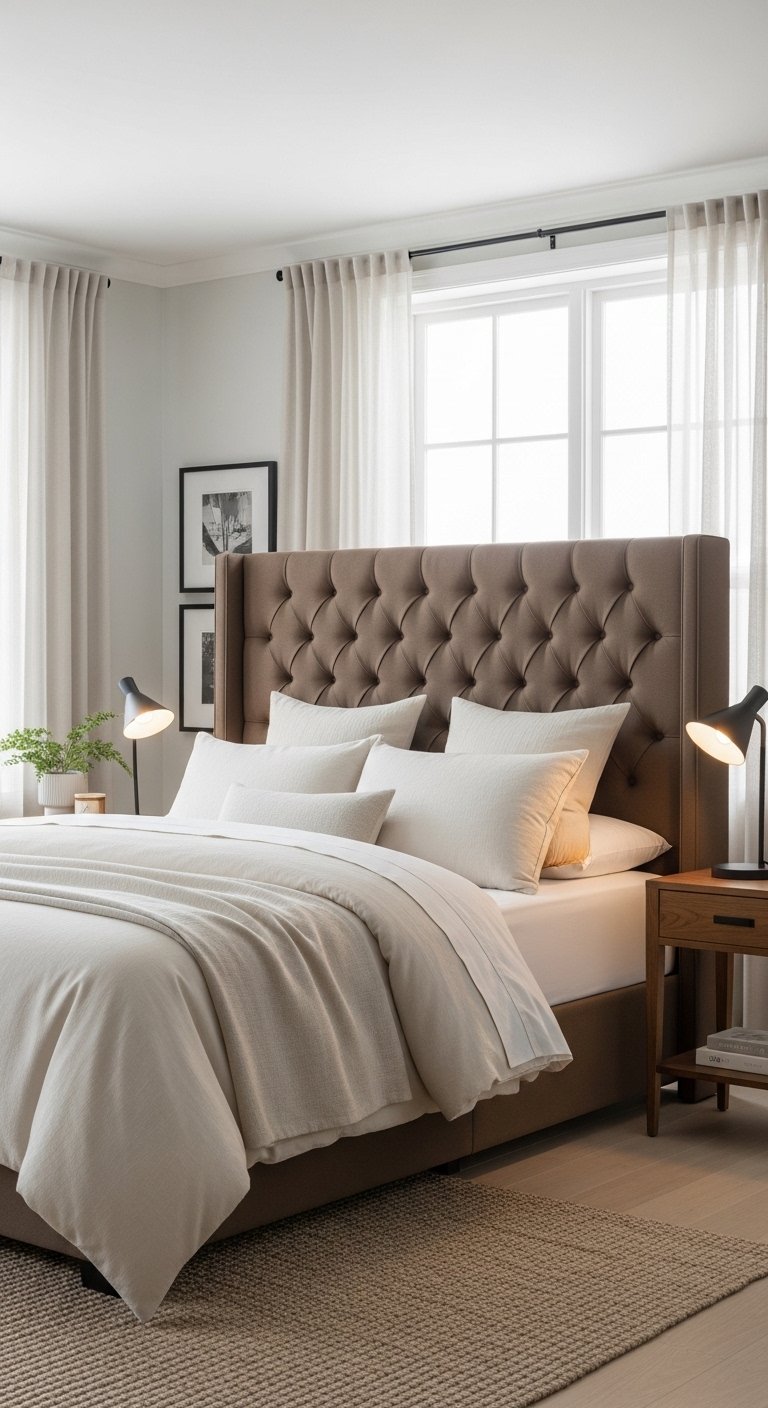
A brown headboard can do a lot of work without making the room feel busy. Upholstered options in suede-like fabric, linen blends, or faux leather add softness and visual weight at the same time.
This works because the bed is already the focal point of the room. Giving it a rich brown frame or headboard instantly makes the space feel more finished. Brown also hides daily wear better than very light upholstery, which is a practical bonus.
This idea works well in primary bedrooms where you want a polished look, but it is also useful in rental spaces where you cannot change the walls. A tall brown headboard adds warmth without needing paint or wallpaper.
Pair it with lighter bedding if you want contrast, or with tonal brown layers for a cocoon-like feel. Just watch the scale. In a very small bedroom, an oversized dark headboard can dominate the room, especially if the surrounding decor is also heavy.
4. Add Walnut Wood Furniture for a Rich, Classic Feel
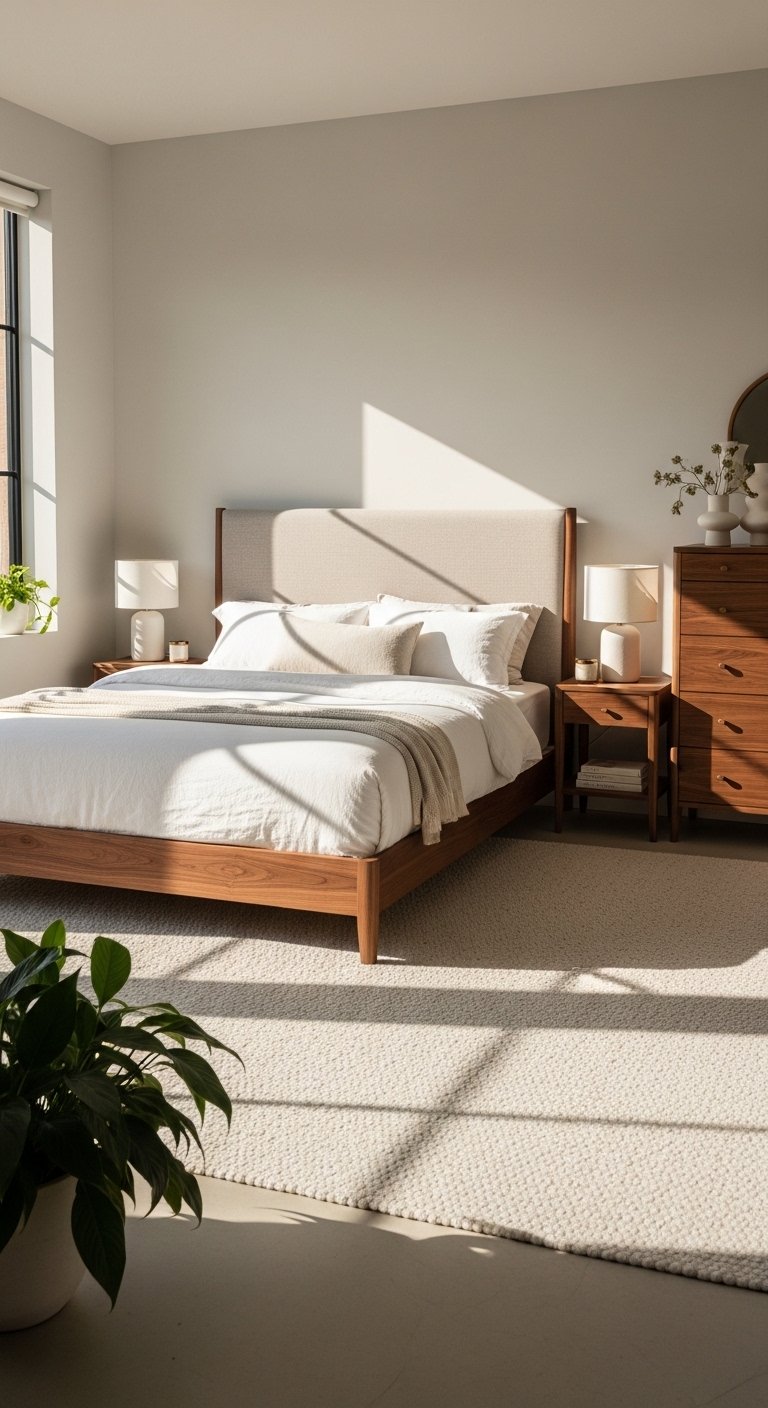
Walnut has a depth that makes a bedroom feel more refined right away. Whether it is a dresser, bed frame, nightstand, or bench, walnut-toned furniture brings warmth without feeling rustic or overly formal.
It works because walnut usually has visible grain and a rich undertone, so it adds character even in simple shapes. That means you do not need ornate furniture to make the room look interesting.
This is best for anyone who wants brown bedroom ideas that feel timeless rather than trendy. Walnut works beautifully in mid-century, contemporary, and classic interiors.
To keep the room balanced, mix walnut with softer elements like linen curtains, a woven rug, or matte ceramic decor. If you are using several wood pieces, try not to match everything exactly. A little variation looks more natural. The mistake to avoid is crowding the room with too many large dark wood pieces, especially in a bedroom without much daylight.
5. Paint the Walls a Warm Taupe or Cocoa Brown
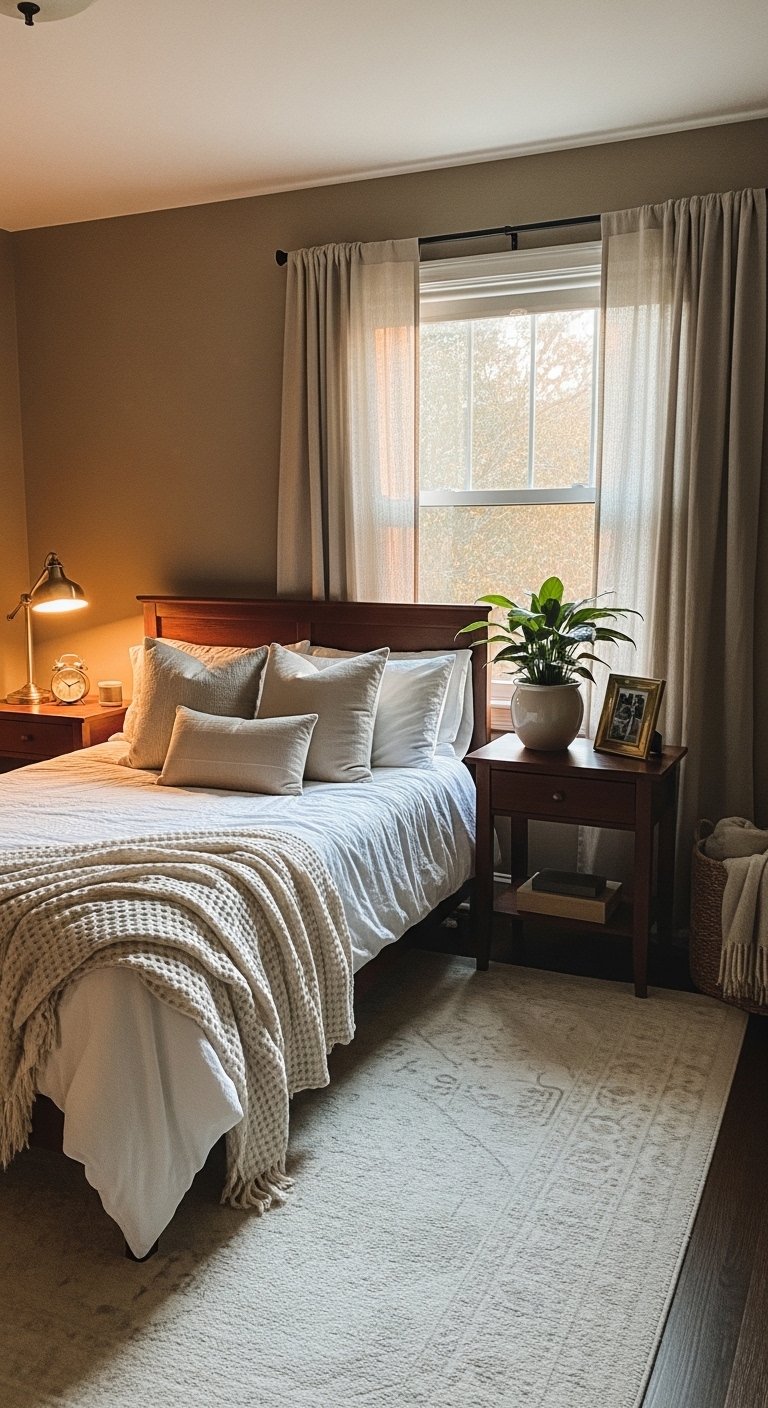
Brown walls can be beautiful in a bedroom when the tone is right. Warm taupe, mushroom, mocha, or muted cocoa can make the room feel calm and enveloping instead of gloomy.
This works because bedrooms benefit from colors that lower visual noise. Brown walls help create that tucked-in feeling people often want at the end of the day. They can also make white bedding and warm wood furniture stand out in a really pleasing way.
This idea suits larger bedrooms especially well, but it can also work in smaller spaces if the room has good lighting and the paint color has enough warmth. A soft brown with a little gray or beige often feels more livable than a very red or very dark brown.
Style it with warm metals, natural fibers, and a few lighter accents so the room does not feel too dense. The caution here is undertone. Some browns can turn muddy or pink depending on the light, so testing paint samples first is worth the effort.
6. Mix Brown With Black for a More Modern Edge
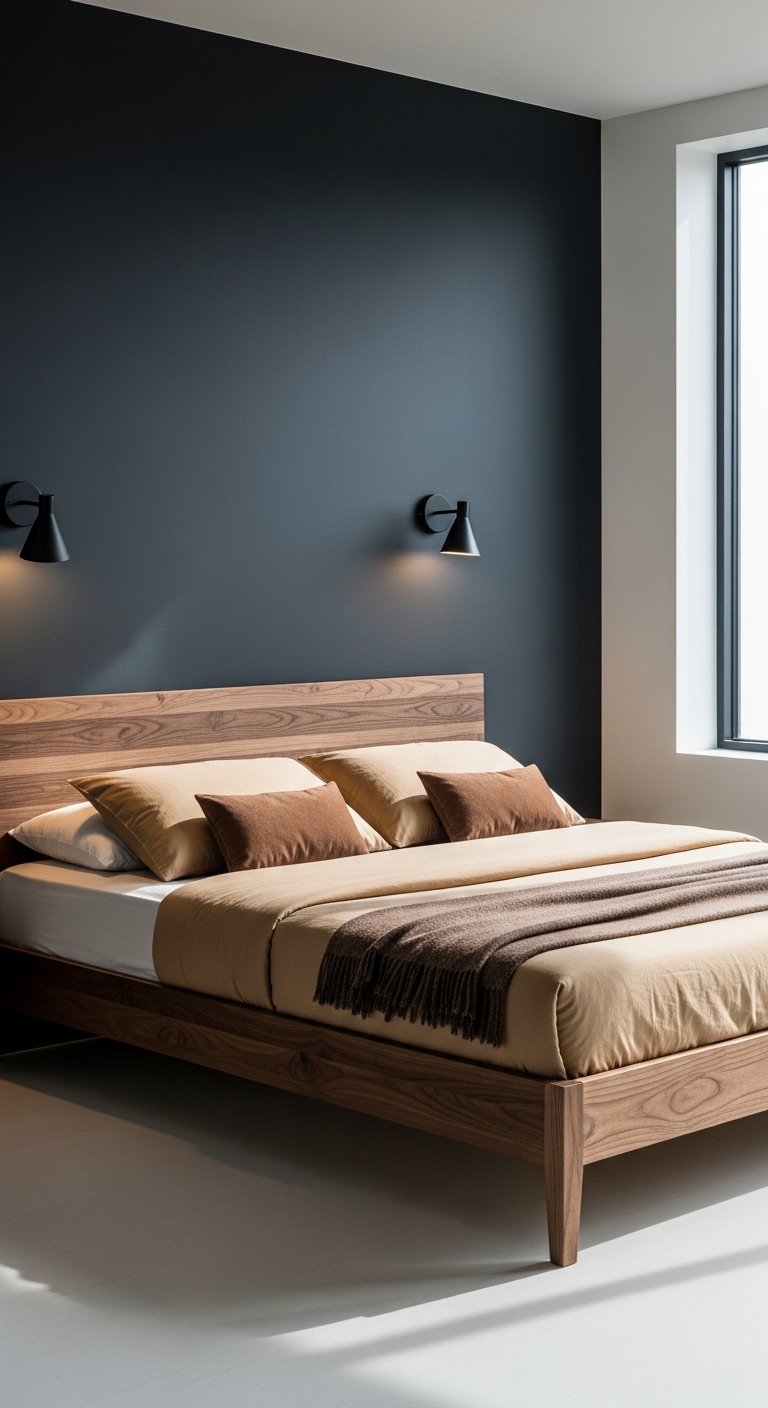
Brown does not always have to read soft and traditional. When paired with black, it can feel sharp, modern, and a little more tailored. Think brown bedding with black sconces, a walnut bed frame with black hardware, or tan leather with matte black lamps.
This combination works because black adds structure while brown keeps the room from feeling cold. Together, they create contrast without relying on bright color.
It is a strong choice for modern bedrooms, masculine-leaning spaces, or anyone who likes cleaner lines and less sweetness in a room. To make it feel balanced, use black as the accent and brown as the warmer base.
A few examples that work well are black-framed artwork over a brown headboard, a dark wood dresser with black drawer pulls, or brown linen curtains with black curtain rods. The main thing to avoid is making everything dark at once. Without lighter bedding, rugs, or walls, the room can start to feel a bit boxed in.
7. Bring in Camel and Tan Textiles for a Lighter Brown Palette
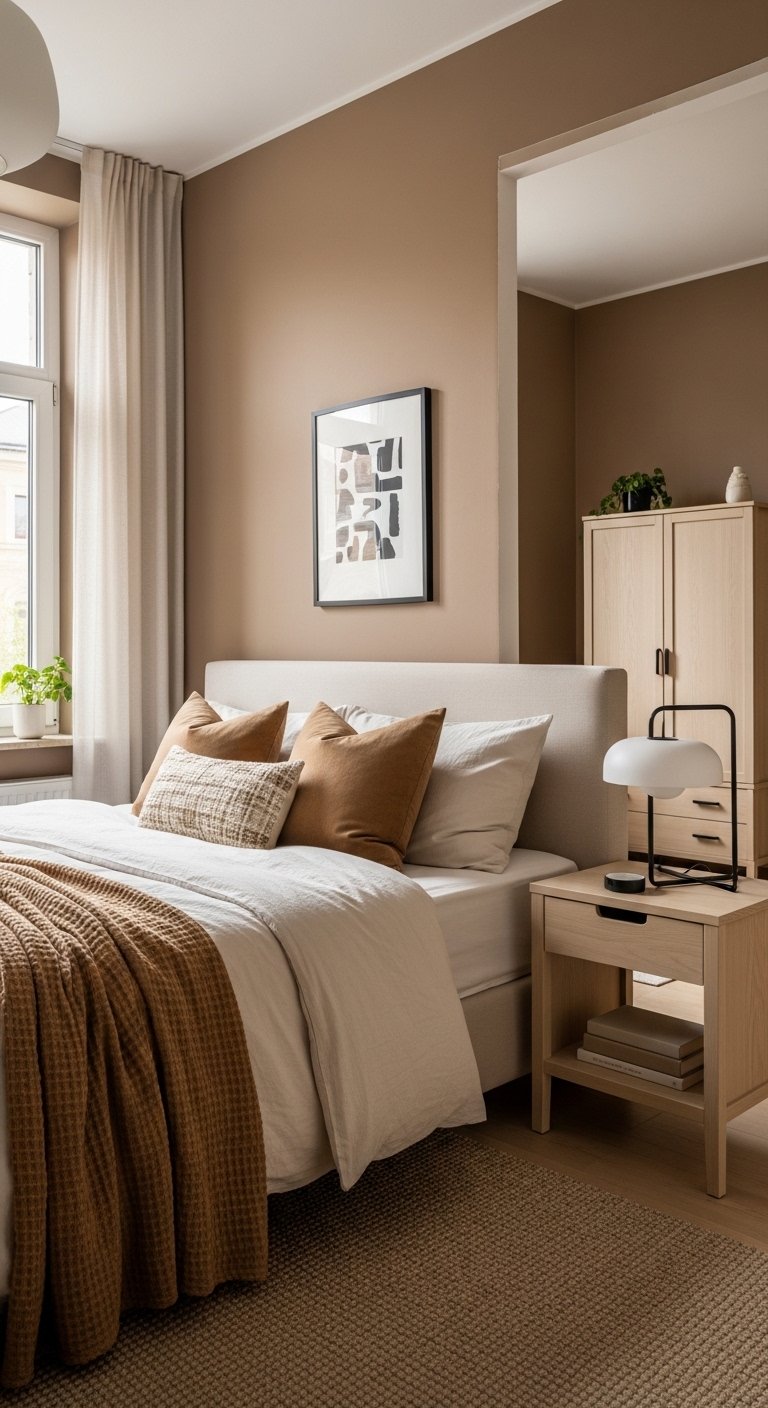
Not every brown bedroom needs deep espresso tones. Camel, tan, and sandy brown are perfect if you want warmth without heaviness. These shades look especially good in blankets, pillows, curtains, and upholstered benches.
They work because they add color gently. A camel throw or tan lumbar pillow can warm up a neutral room without making it feel too themed or overly brown.
This approach suits Scandinavian-inspired bedrooms, soft modern spaces, and smaller rooms that need a lighter touch. It also works well if you already have white or oak furniture and want to bring in brown slowly.
To style it well, pair lighter brown textiles with off-white bedding, pale wood, and maybe a little black or charcoal for contrast. One limitation is that tan-heavy rooms can sometimes feel too safe or bland, so include at least one stronger element like darker wood, patterned fabric, or textured wall art.
8. Use Brown Bedding to Warm Up a Plain Room Quickly
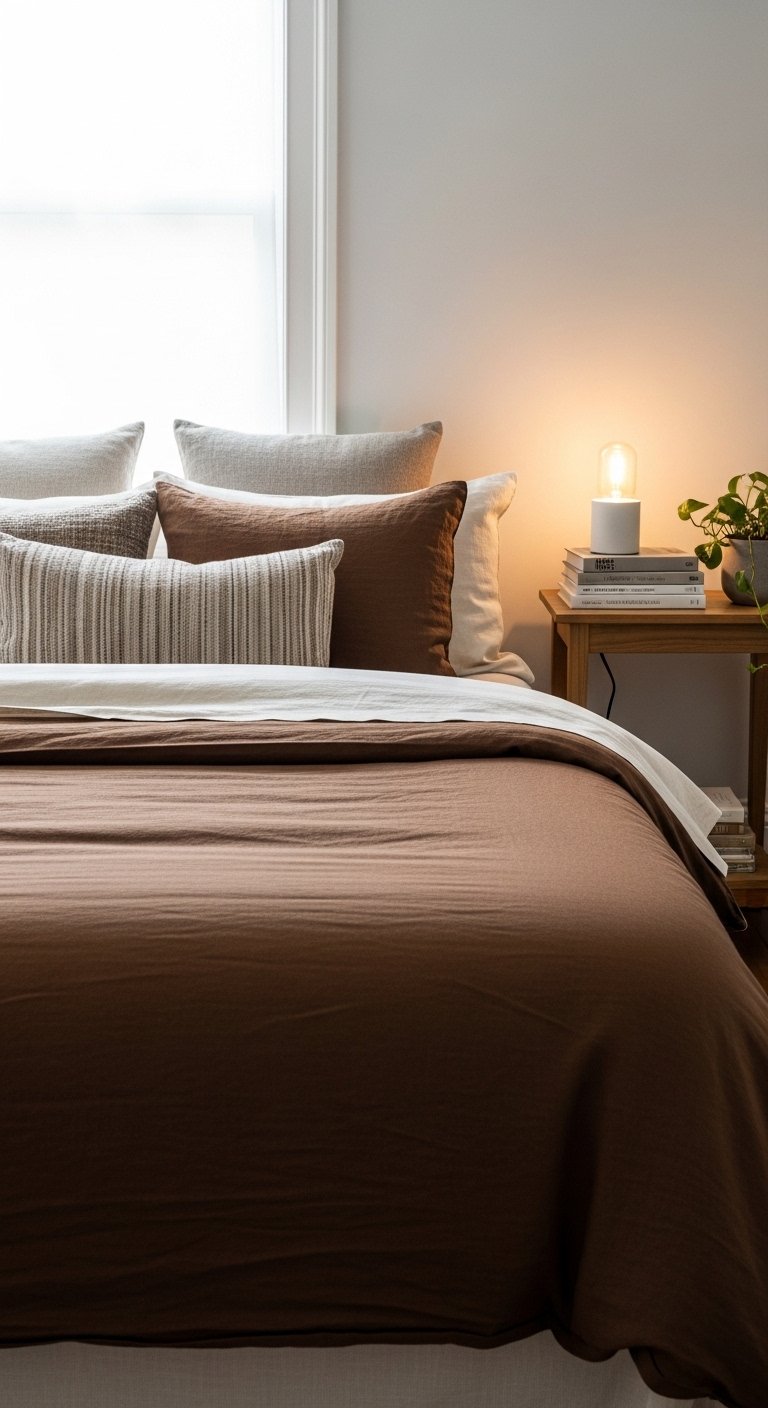
Switching the bedding is one of the easiest ways to introduce brown into a bedroom. A chocolate duvet, cinnamon quilt, taupe linen sheets, or striped brown throw blanket can shift the whole mood of the room without any renovation.
This works because the bed takes up so much visual space. When you change the bedding, the room changes with it. Brown bedding also tends to feel calmer and less stark than bright white alone.
This is ideal for renters, budget-friendly refreshes, or anyone who wants to try brown bedroom ideas without committing to paint or furniture. It also helps rooms with white walls feel more layered and less clinical.
Stick to fabrics with some texture so the color feels rich rather than flat. Linen, cotton slub, quilted finishes, and knit throws all help. The common mistake here is choosing a brown that feels too dull against the rest of the room. If the bedding looks lifeless, add cream pillows, warm wood, or a patterned accent to wake it up.
9. Pair Brown With Sage Green for an Earthy, Calm Bedroom
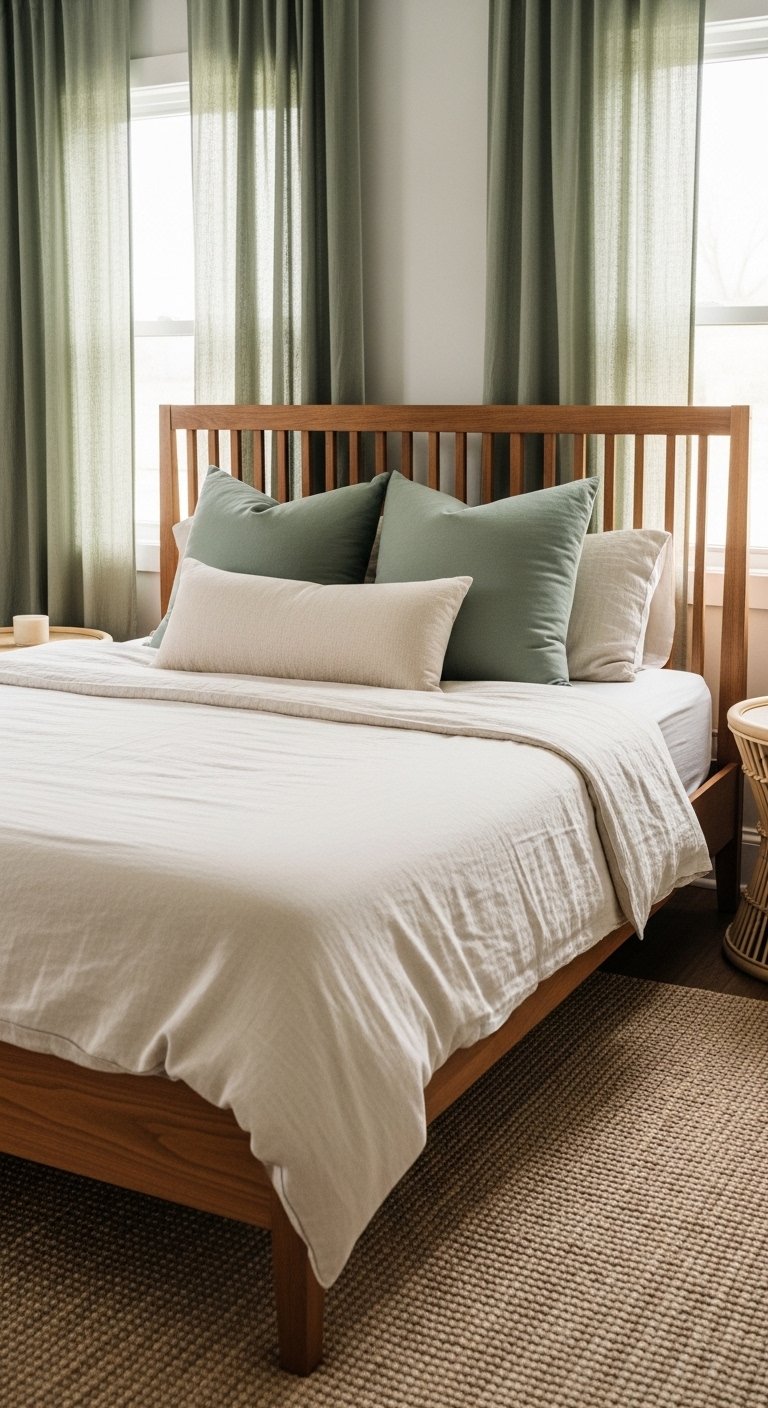
Brown and sage green are one of those combinations that look natural almost without trying. Brown grounds the room, while sage adds a bit of freshness and softness.
It works because both colors are rooted in nature. Together they create a quiet palette that feels restful rather than decorative for the sake of it. That makes them especially good for bedrooms.
This idea works well in rooms where you want a relaxed, slightly organic feel. It suits people who want more color than plain neutrals but still want the space to feel calm.
You can use brown as the base through wood furniture and bedding, then add sage in pillows, curtains, artwork, or even a painted accent wall. To keep the palette sophisticated, choose muted greens instead of anything too bright. The caution is balance: if both colors are mid-tone and muted, the room can look a bit sleepy unless you add contrast through cream, black, or brass.
10. Add Leather or Faux Leather Accents for Texture
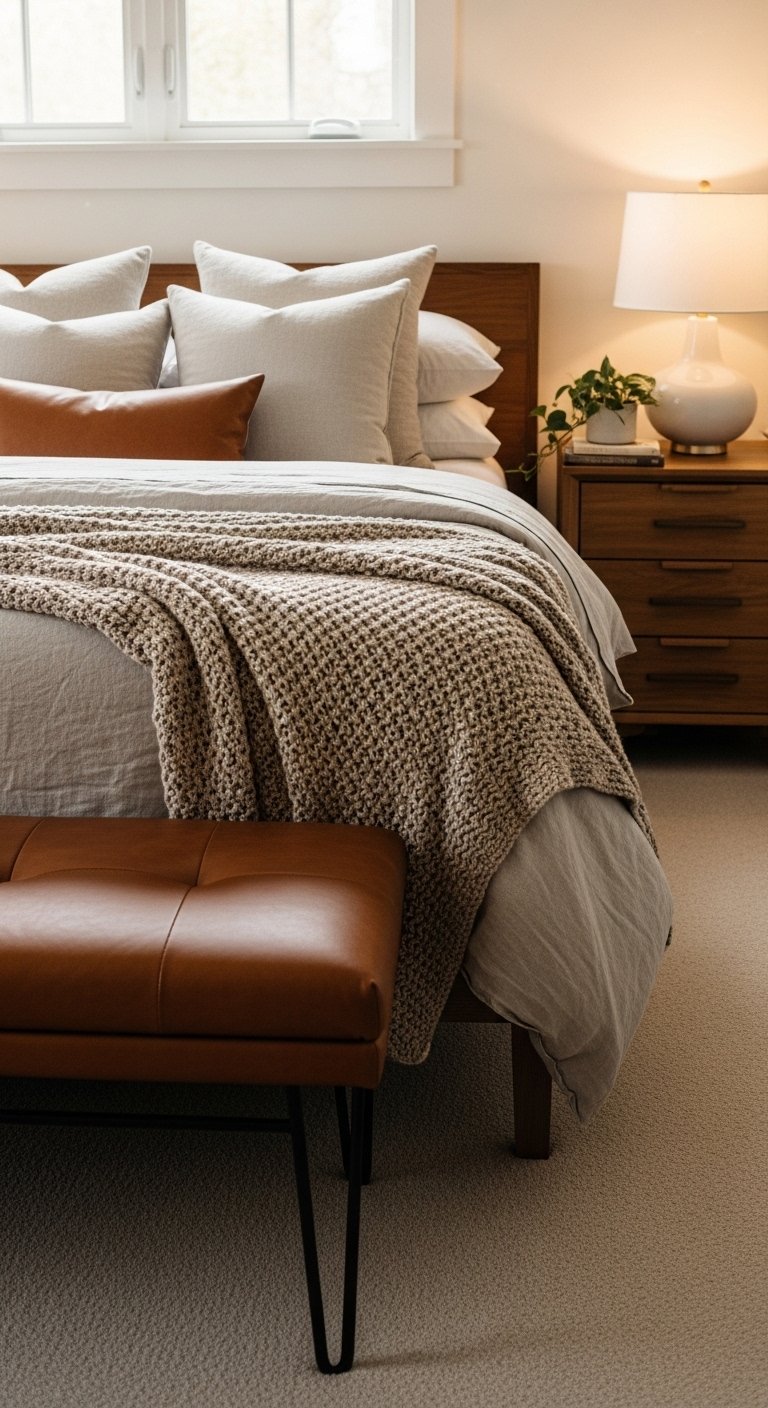
A little brown leather can make a bedroom feel more layered and grown-up. This does not mean turning the room into a study. A leather bench, strap detail, chair seat, pillow, or small ottoman is often enough.
This works because leather brings a different texture than fabric or wood. It adds warmth, slight sheen, and structure all at once. In a neutral bedroom, that variety can make the room feel much more finished.
It is best for modern, rustic-modern, and industrial-leaning spaces, but smaller leather touches can work almost anywhere. Cognac and chestnut tones are especially versatile.
Pair leather with soft bedding and natural materials so the room stays inviting. One thing to watch is overuse. Too much leather, especially dark leather, can make a bedroom feel stiff rather than restful. A few pieces go much further than a full set.
11. Choose Brown Curtains to Frame the Room Warmly
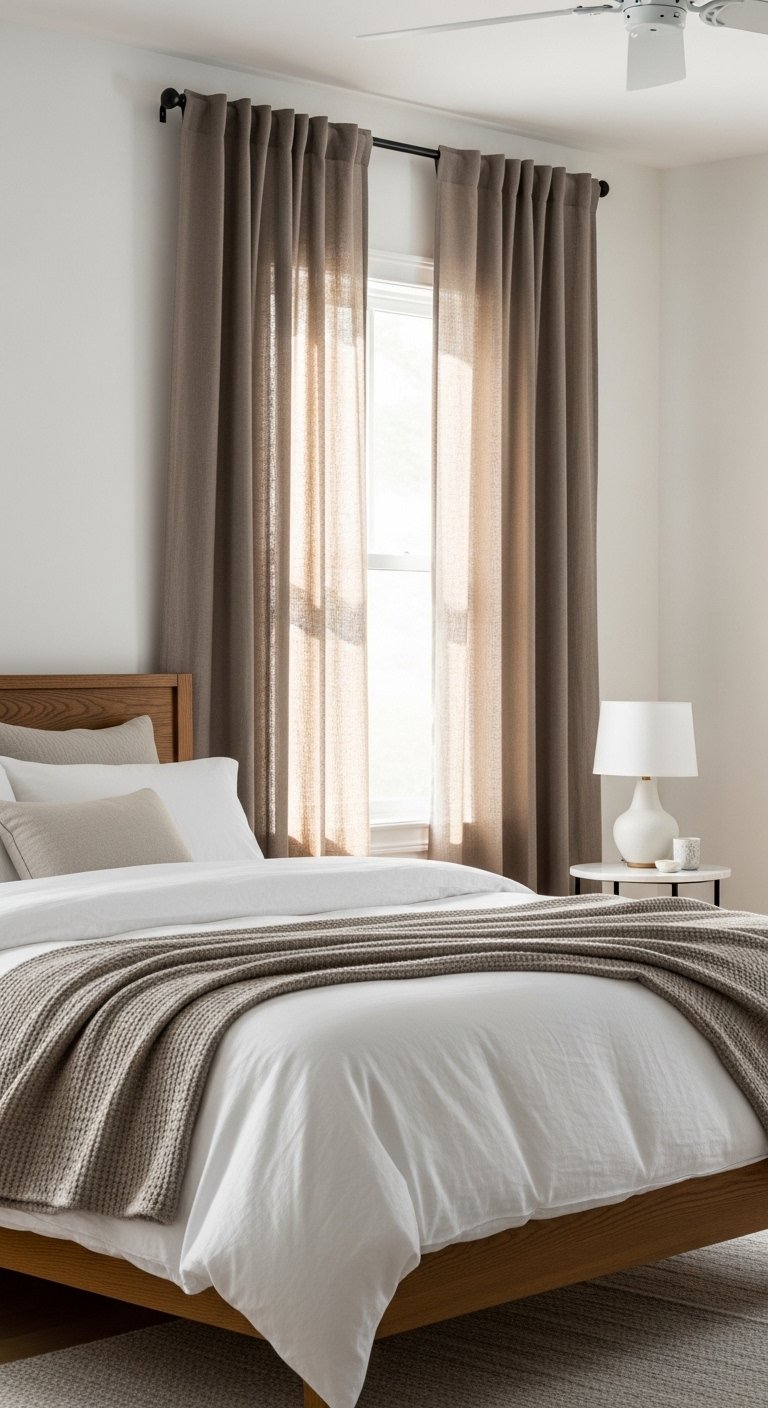
Curtains are often overlooked, but they can change the feeling of a bedroom more than people expect. Brown curtains, especially in linen-look or heavier woven fabric, can make the room feel softer and more grounded.
They work because they frame the windows and add vertical visual weight. That helps the room feel more complete, and the color introduces warmth at eye level instead of keeping all the brown down near the floor or furniture.
This idea is useful in bedrooms with plain walls, simple furniture, or a lot of white. It also works well in larger rooms that need a little more softness.
Lighter browns like taupe or camel keep things airy, while deeper browns feel more dramatic. Hang the curtain rod slightly higher and wider than the window so the room looks taller and the curtains feel intentional. The mistake to avoid is using heavy dark curtains in a small dim room unless you really want a moodier effect.
12. Ground the Space With a Brown Rug
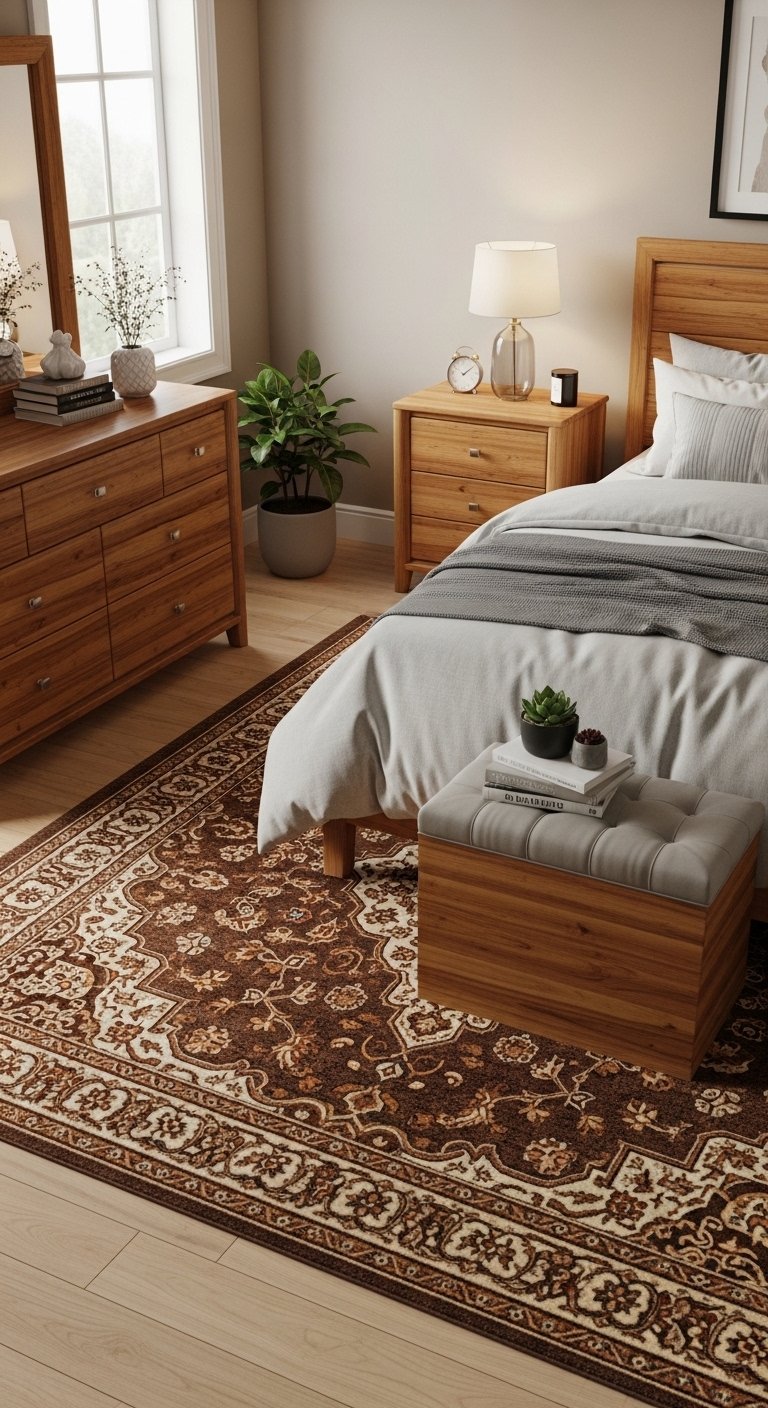
A brown rug can be one of the smartest additions in a bedroom because it makes the room feel connected from the ground up. This could be a patterned vintage-style rug, a soft taupe area rug, or a deeper brown woven option.
It works because rugs pull furniture together and soften hard flooring. Brown also tends to hide everyday wear better than very pale rugs, which matters in real homes.
This idea works in just about any bedroom, especially ones with white walls or lighter furniture that need some visual grounding. It is also helpful in rooms with a lot of hard surfaces that feel a little echoey or unfinished.
Choose a tone that relates to at least one other brown element in the room, like the bed frame, pillows, or nightstands. If the rug is dark and the furniture is dark, bring in lighter bedding to stop the room from feeling too bottom-heavy.
13. Mix Brown With Brass or Gold for a Softer Luxe Look
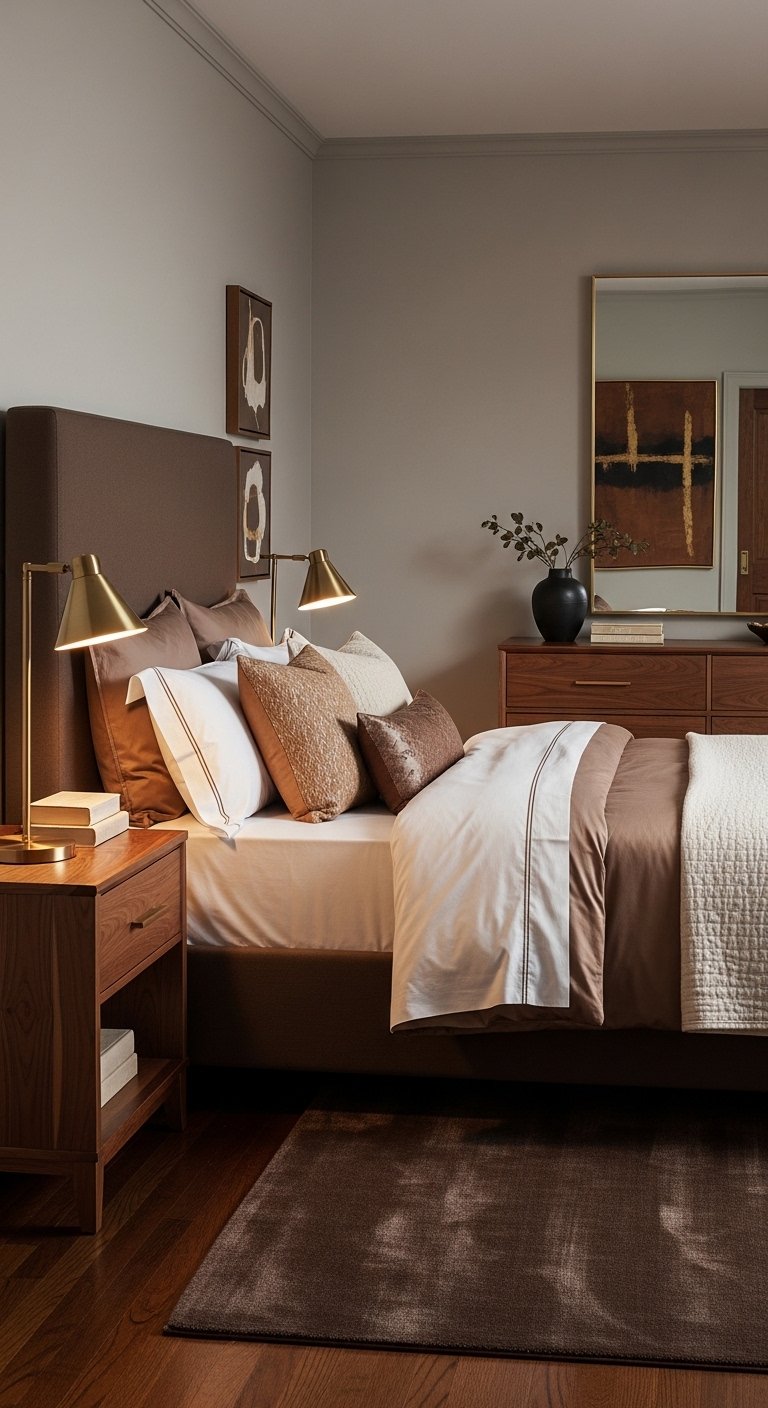
Brown can look surprisingly elegant when paired with warm metallic accents. Brass lamps, gold-framed mirrors, or warm-toned cabinet hardware can lift brown without making it flashy.
This works because both brown and brass have warmth. They reinforce each other in a way that feels inviting rather than stark. Even a simple bedroom starts to feel a bit more polished with this combination.
This is a great fit for classic, hotel-inspired, and transitional bedrooms. It works especially well with chocolate brown, camel, walnut, and taupe.
The key is restraint. A brass reading lamp, a gold mirror, and maybe one or two small accents are usually enough. Too many shiny finishes can make a warm bedroom feel overly styled. Brown looks best with metals that have some softness, not mirror-bright glam.
14. Keep the Palette Mostly Brown but Break It Up With Texture and Pattern
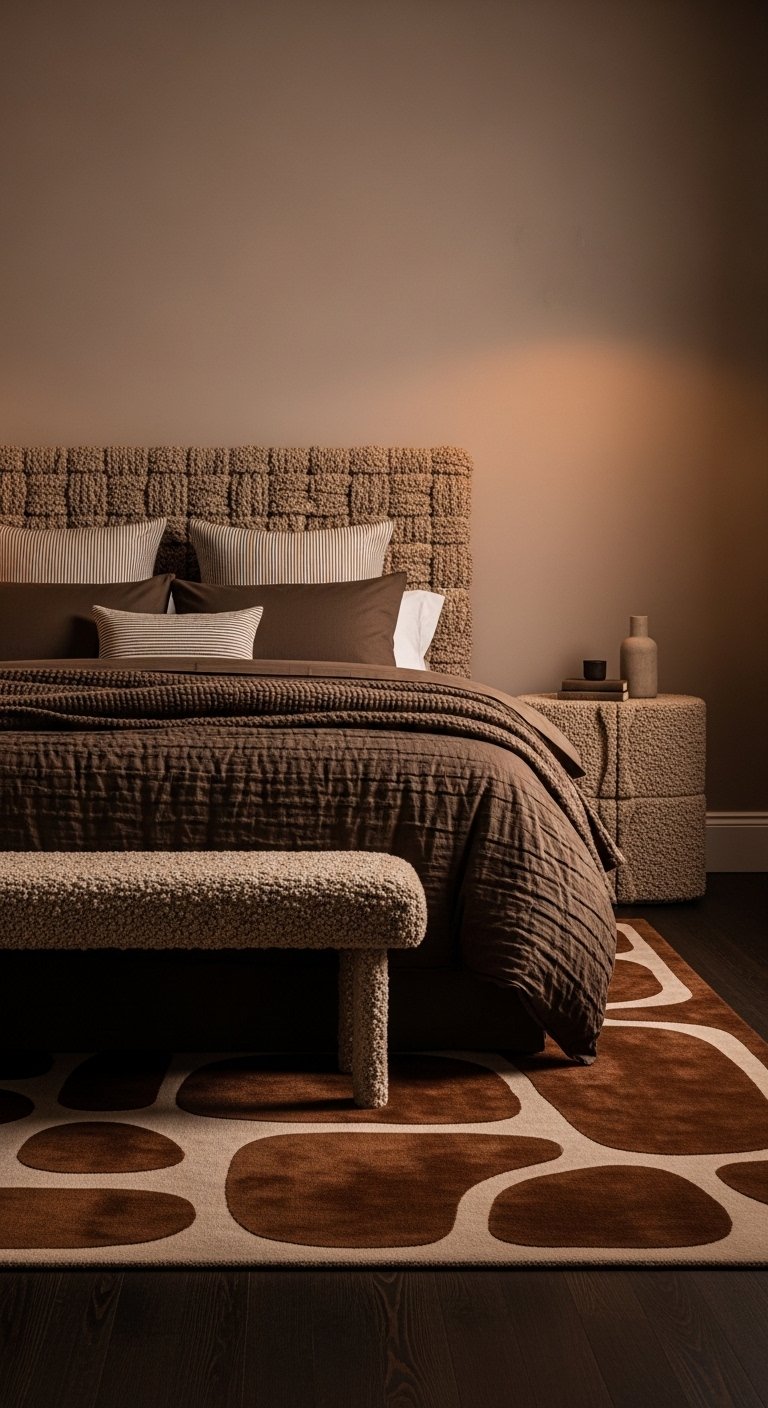
A mostly brown bedroom can feel beautiful and cocooning, but it needs variety to stay interesting. That variety should come from texture and pattern as much as color. Think ribbed bedding, a woven headboard, subtle striped pillows, boucle seating, or a patterned rug in brown and cream.
This works because brown is a quiet color. It does not always create contrast on its own, so texture does some of the heavy lifting. That is what keeps the room warm and layered instead of one-note.
This idea suits people who love neutrals and want a bedroom that feels calm, cohesive, and easy to live with. It is also useful if you dislike bright accents and would rather keep the room understated.
When styling, mix smooth and rough, matte and soft, simple and slightly patterned. The caution is that a monochromatic room can start to feel dull if every material is plain. Texture is not optional here. It is what makes the room work.
Final Thoughts on Brown Bedroom Ideas
The best brown bedroom ideas are the ones that make the room feel warmer, calmer, and easier to live in, not heavier or darker than it needs to be. Brown works best when it is layered thoughtfully, softened with lighter tones, and paired with materials that add texture and contrast. Whether you go for brown bedding, walnut furniture, taupe walls, or just a few camel accents, the goal is the same: create a bedroom that feels grounded and stylish without trying too hard.
If you are unsure where to start, begin with one big change like bedding, curtains, or a rug. Brown is one of the easiest colors to build on once it is in the room, which is part of what makes these brown bedroom ideas so useful in the first place.